
The Hidden Things Your Period Can Tell You About Your Health
If your period suddenly becomes heavier, more painful, unpredictable, or simply different, I don't want you to brush it off automatically. Your menstrual cycle can provide valuable clues that encourage us to look more closely at your overall health. Sometimes the symptoms women have learned to tolerate are exactly the ones we should question.
My approach is to listen to those signals and explore why your body may be responding differently rather than focusing only on making the immediate symptom go away. This week, let's see how surprised you may be by how much your period can tell you about your health.
-Dr. Alicia Armitstead

The Hidden Health Clues Worth Paying Attention To
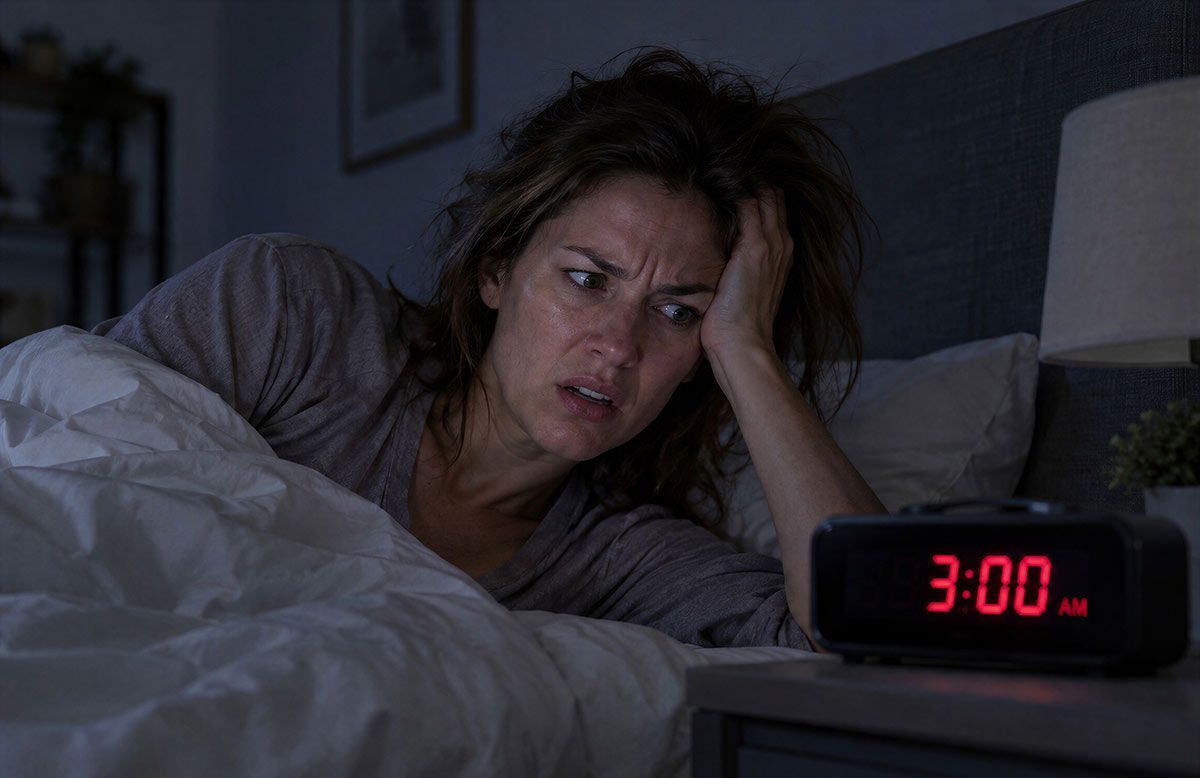
Your period has its own normal. Your cycle has its own rhythm, and recognizing when that rhythm changes can reveal important clues about your health. Most women know their period well enough to recognize when something feels different. Maybe it suddenly becomes heavier, your cramps get worse, it starts showing up early, arrives late, or skips altogether. You may feel exhausted, unusually emotional, bloated, or not like yourself.
It can be easy to dismiss these changes as something that comes with having a period. But your menstrual cycle does not exist in isolation. Hormones, ovulation, thyroid function, nutrition, stress, exercise, sleep, and other aspects of your health can all fit into the bigger picture.
The key is knowing what is normal for you. One unusual month may not mean much, but when a fairly predictable cycle keeps changing, I want to know what else is happening in your body.
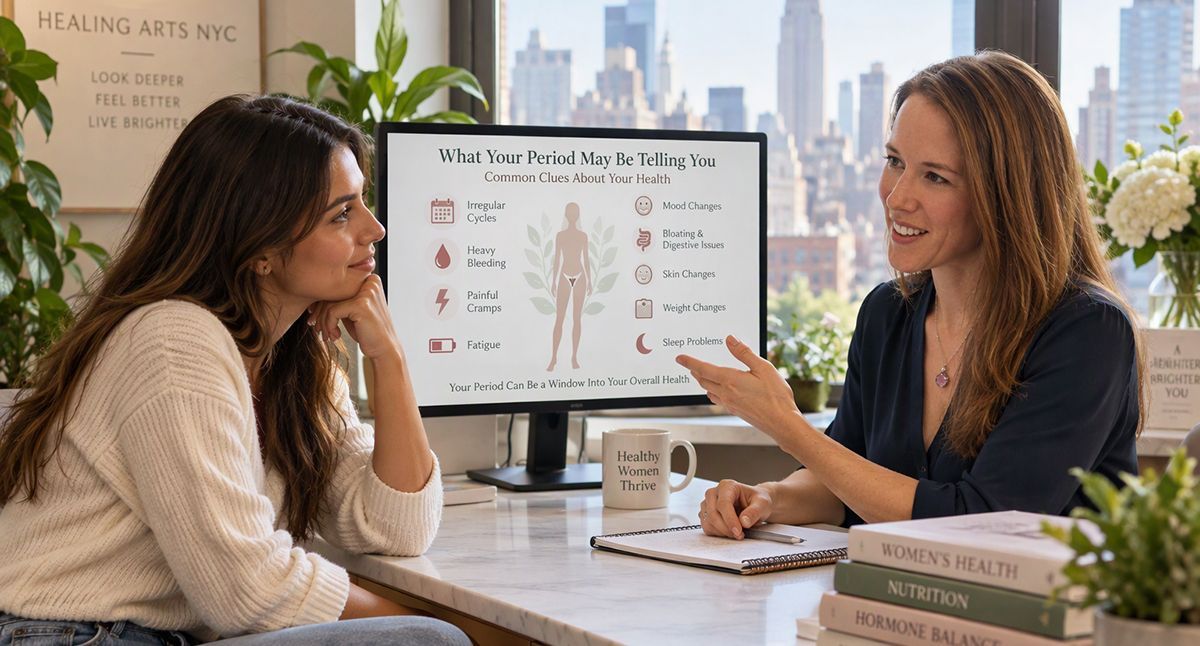
The clues aren't limited to when your period starts, because changes in flow, pain, energy, mood, and other symptoms can create a fuller picture.
- Your period suddenly becomes much heavier - When a noticeably heavier period becomes your new pattern, it deserves attention. Heavy menstrual bleeding can have different causes, and over time, significant blood loss can also contribute to iron deficiency and anemia.
- Your previously predictable cycle becomes irregular - One unusual month does not necessarily mean something is wrong, but persistent irregularity gives us a reason to look deeper. Hormonal changes, ovulation, thyroid function, PCOS, nutrition, stress, exercise, and other factors may be worth exploring.
- Your period disappears - If your period unexpectedly stops, don't assume stress is the only cause. Pregnancy is one possible reason for a missed period, but persistent changes should be discussed with your healthcare provider.
- Your cramps begin disrupting your life - There is a difference between some menstrual discomfort and pain that keeps you from working, sleeping, exercising, going out with friends, or enjoying your normal routine. Severe or worsening pain is not something you should learn to tolerate.
- You feel completely drained around your period - Fatigue is easy to blame on work, late nights, stress, or a busy schedule. When it becomes significant, particularly alongside heavy bleeding, it may be worth looking more closely at your overall health.
- Your mood changes significantly - Notice whether anxiety, irritability, sadness, cravings, sleep problems, or difficulty concentrating repeatedly appear during a particular part of your cycle. Recognizing a pattern gives you useful information to share with your healthcare provider.
- Your period changes at the same time as other things change. Hair and skin changes, unexplained weight changes, persistent fatigue, digestive problems, difficulty sleeping, or feeling unusually hot or cold can add important context. This is when looking beyond the menstrual symptom itself may become especially helpful.
Your Thyroid Could Be Part of the Story
Your thyroid is a good example of why I don't want to look at menstrual symptoms as though nothing else in the body is connected. If your period changes while you are also experiencing unusual fatigue, weight changes, hair changes, temperature sensitivity, or other symptoms, it may be worth considering whether your thyroid should be part of the conversation.
The important question isn't simply how we make your next period easier. I want to understand why your normal pattern changed in the first place and what else may have been changing at the same time. That is where your period can become an important piece of a much larger health puzzle.
What Does Your Lifestyle Have to Do with Your Period?
Living in New York can slowly change what you think "normal" feels like.
You work all day, squeeze in a workout, eat when you can, meet friends for dinner, stay up later than planned, scroll through your phone in bed, wake up tired, grab coffee, and start all over again. When everyone around you seems to be living the same way, being tired, stressed, and overscheduled can begin to feel ordinary.
But when your period starts changing too, I want to look deeper. Your sleep, nutrition, stress, diet, medications, supplements, environmental exposures, and other symptoms can all provide clues about what may be putting additional stress on your body.
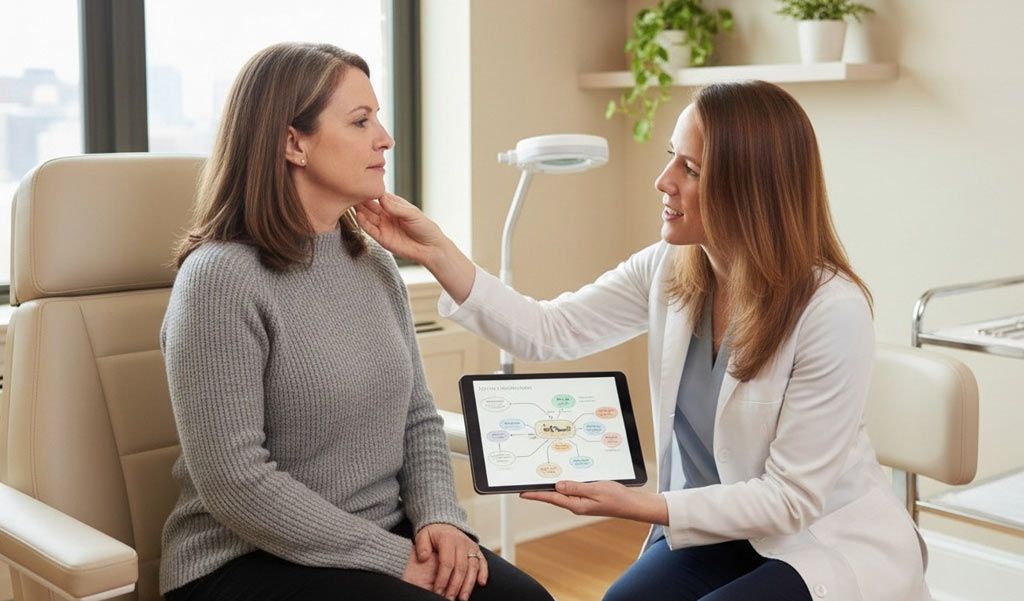
This is one reason Nutrition Response Testing is such an important part of my practice. As a Master rated Nutrition Response Testing practitioner, I use this noninvasive form of muscle testing to evaluate nutritional needs and look for underlying stress or weakness that may be affecting your overall health. Nutrition Response Testing gives me another way to investigate what deserves further attention, rather than simply assuming your lifestyle is "too stressful."
Depending on what I find, I may recommend individualized nutritional support, dietary and lifestyle changes, or nutritional and herbal supplements. My goal isn't simply to make your period easier to live with. I want to understand why your body may be responding differently in the first place.
When the Symptoms Start Connecting
Sometimes the most revealing information isn't one symptom, but the pattern that emerges when several seemingly unrelated symptoms occur together.
Perhaps your periods have become irregular, and you've also noticed that you're exhausted every afternoon. Maybe your cramps have become more difficult while your digestion has changed. Your sleep may be different, your skin could be breaking out more frequently, or your body may feel different than it did several months ago.
These connections are easy to miss when every symptom is viewed separately. You may think of the period as a gynecological issue, fatigue as a sleep problem, bloating as a digestive problem, and anxiety as stress.
I want to step back and look at the whole picture. Asking when these changes began, what was happening beforehand, and which symptoms appeared together can help us decide what deserves a closer look.
Don't Forget the Emotional Side of Your Health
Your physical symptoms are important, but your emotional health and the stress you carry deserve attention too.
Stress doesn't always look dramatic. It can be the constant pressure of work, relationships, family responsibilities, financial worries, lack of sleep, or simply feeling as though you never really get to turn everything off.
For some patients, addressing emotional stress can become another part of a personalized wellness plan. I may incorporate PSYCH-K or Emotional Release Therapy when appropriate to help address the emotional patterns and stress that may be part of the bigger picture.
Reiki may also be incorporated as a gentle complementary approach focused on relaxation and emotional well-being.
The point isn't to suggest that menstrual symptoms are "all in your head." It is to recognize that physical and emotional health don't have to be treated as completely separate parts of you.
Looking Deeper for the Why
Once we understand your symptoms and patterns, we can consider which parts of a holistic, individualized approach may be appropriate for you.
At Healing Arts NYC, I don't choose a therapy simply because someone is experiencing uncomfortable periods. I want to understand the individual patient first and consider her symptoms, nutrition, lifestyle, stress, sleep, digestion, emotional health, and other relevant factors.
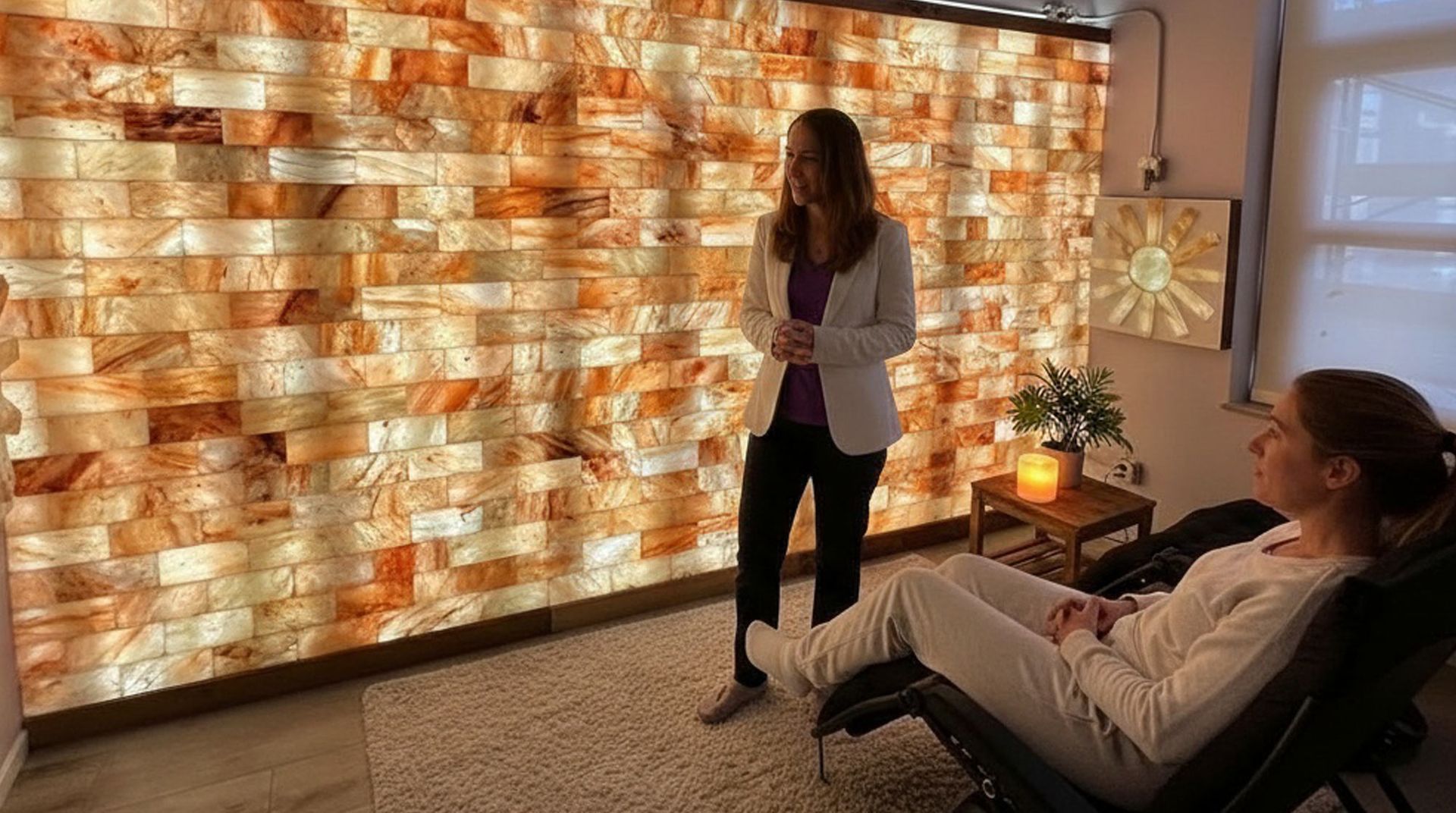
Nutrition Response Testing may help guide nutritional and lifestyle support. At the same time, PSYCH-K or Emotional Release Therapy may be appropriate when we want to address stress and emotional patterns. Reiki may offer another complementary approach for relaxation and emotional well-being.
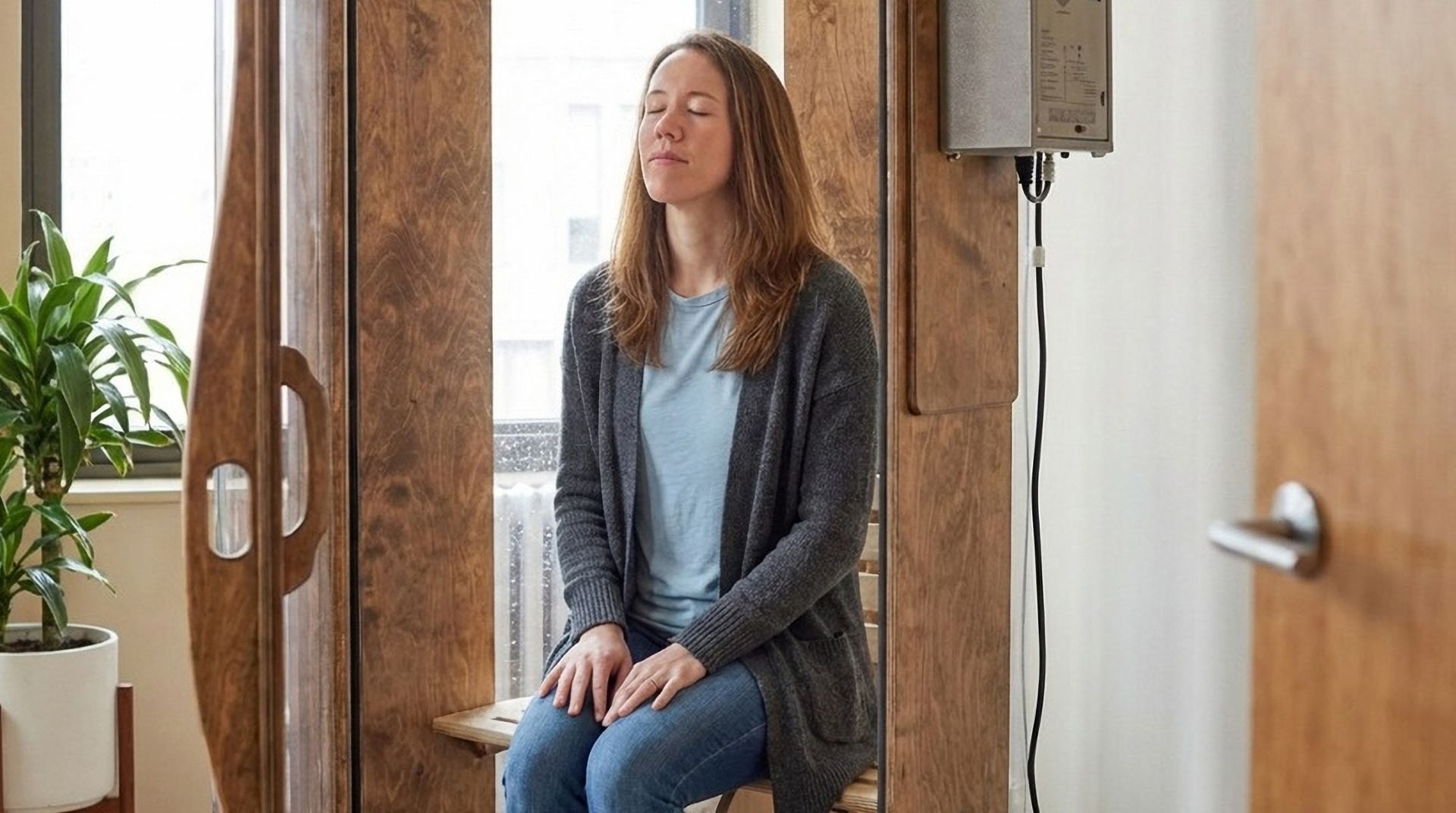
Depending on the individual, other supportive modalities may also include PEMF Therapy, lymphatic therapy, detoxification therapies, nutritional supplementation, herbal support, and lifestyle changes.
The goal isn't to use as many modalities as possible. It is to understand the individual, look at the bigger picture, and determine which approaches make sense for that person.
Start Listening to What Your Body Is Telling You
You don't need to become obsessed with your menstrual cycle, but becoming familiar with your personal patterns can help you recognize when something truly changes.
Pay attention to when your period begins, how long it lasts, whether your flow changes, and what your cramps are like. Notice what's happening with your energy, mood, sleep, digestion, skin, appetite, and overall sense of well-being throughout your cycle.
If something changes and stays different, don't automatically accept it as your new normal. Bring me those observations so we can discover why the change may be happening.
Most importantly, don't assume that feeling terrible every month is simply the price of having a period. Your menstrual cycle is only one part of your health, but it can also offer valuable clues that encourage us to look more closely at the whole person.
Ready to Understand What Your Period May Be Telling You?
If your period has changed, your symptoms are getting harder to ignore, or you don't feel like yourself anymore, let's look deeper and find out what your body may be trying to tell you.
At Healing Arts NYC, I look beyond the symptom and consider the nutritional, physical, emotional, and lifestyle factors that may be contributing to how you feel. Using Nutrition Response Testing and other holistic modalities when appropriate, we can develop an individualized approach based on your particular needs.
You don't have to keep accepting painful, exhausting, or disruptive periods as something you have to live with!
Schedule an appointment with Dr. Alicia Armitstead at Healing Arts NYC, and let's start looking for the why behind your symptoms.
Yours in Good Health
Dr. Alicia Armitstead
Healing Arts NYC
(866) 585-5999
Please Share this Blog Post