


Bloating Remedies NYC - Dr. Alicia Armitstead

I’m Dr. Alicia Armitstead, and I understand how frustrating and uncomfortable chronic bloating can be. Many of my patients tell me it affects their confidence, their daily routines, and even their social life. Through Nutrition Response Testing and Applied Kinesiology, I help identify the root cause of your bloating so we can create a natural, personalized remedy plan that restores comfort and balance.
-Dr. Alicia Armitstead
Natural Holistic Solutions for Severe and Chronic Bloating at the Healing Arts NYC Health and Wellness Center in Manhattan NY 10017 and Connecticut
What Is Bloating?
Bloating is a sensation of abdominal fullness, tightness, or swelling that often feels disproportionate to what you’ve eaten. It can occur occasionally or become a chronic issue that disrupts daily life. Many patients describe it as pressure that builds throughout the day, making clothing feel tighter and movement uncomfortable. Bloating can be caused by digestive dysfunction, food sensitivities, or imbalances in the gut microbiome. It may also be related to slowed motility, inflammation, or poor nutrient absorption.
Some individuals experience bloating after specific meals, while others feel it consistently regardless of diet. Although common, persistent bloating is not normal and often signals an underlying imbalance. With proper holistic evaluation, bloating can be remedied naturally and effectively.
Common Symptoms of Bloating
Bloating rarely appears alone; it often comes with other digestive or systemic symptoms that reveal deeper imbalances. Many patients experience symptoms that fluctuate throughout the day or worsen after meals. Understanding these patterns helps me identify the root cause through muscle testing and nutritional analysis.
- Abdominal Fullness and Pressure — This symptom often feels like the stomach is expanding or pushing outward, even when you haven’t eaten much. The pressure can make it difficult to bend, move comfortably, or wear fitted clothing, and may worsen as the day progresses.
- Gas and Distention — Excessive gas can create visible abdominal swelling that feels firm or tight to the touch. Patients often report embarrassment or discomfort in social settings, especially when gas is difficult to control or relieve.
- Irregular Bowel Movements — Constipation or loose stools can contribute to bloating by disrupting normal digestive flow. When motility slows, food and waste remain in the digestive tract longer, increasing fermentation and pressure.
- Early Fullness When Eating — Feeling full after just a few bites can indicate impaired digestion or delayed stomach emptying. This symptom often leads to reduced nutrient intake and can contribute to fatigue or low energy.
- Nausea or Digestive Discomfort After Meals — Some patients experience queasiness or discomfort shortly after eating, especially when consuming trigger foods. This may be related to food sensitivities, enzyme deficiencies, or inflammation in the digestive tract.
- Lower Abdominal Cramping — Cramping can occur when the intestines struggle to move food efficiently. These spasms may be sharp or dull and often accompany gas buildup or constipation.
- Fatigue and Brain Fog — Chronic bloating can interfere with nutrient absorption, leading to low energy and difficulty concentrating. Many patients feel mentally sluggish when their digestive system is inflamed or imbalanced.
Many patients are surprised by how interconnected these symptoms are and how quickly they can escalate when the digestive system is under stress. When I evaluate bloating through Nutrition Response Testing and Applied Kinesiology, these symptom patterns help me pinpoint the exact organs, food sensitivities, and stressors contributing to your discomfort.
Understanding these symptoms as part of a larger imbalance allows us to create a natural, targeted remedy plan that restores comfort, improves motility, and supports long‑term digestive health.
Common Causes of Bloating
Bloating can stem from a wide range of underlying issues, many of which are missed in conventional evaluations. Food sensitivities are one of the most common causes, especially reactions to gluten, dairy, or processed foods. Imbalances in the gut microbiome can lead to excessive fermentation and gas production. Slow digestive motility may cause food to remain in the intestines longer than it should, increasing pressure and discomfort. Enzyme deficiencies can impair the breakdown of proteins, fats, and carbohydrates, leading to incomplete digestion.
Stress and nervous system dysregulation can also affect gut function, contributing to bloating and irregular bowel movements. Hormonal fluctuations, particularly progesterone changes, may slow motility and worsen bloating. Environmental toxins and heavy metals can disrupt digestive balance and contribute to inflammation. Identifying the root cause requires a holistic evaluation rather than symptom-based guessing.
How Dr. Alicia Armitstead Remedies Chronic and Severe Bloating Naturally
My approach begins with Nutrition Response Testing to identify the exact stressors affecting your digestive system. Through muscle testing, I evaluate how your body responds to specific foods, toxins, and organ stress patterns. I use Applied Kinesiology to assess structural and neurological imbalances that may be contributing to bloating.
Once we identify the root cause, I create a personalized natural remedy plan that supports digestive healing and motility. This may include targeted whole-food supplements, enzyme support, or detoxification protocols. I also evaluate the gut microbiome to determine whether bacterial imbalance or yeast overgrowth is present.
My holistic modalities focus on restoring proper digestive function rather than masking symptoms. Over time, patients experience reduced bloating, improved comfort, and better overall digestive resilience.

Are You an Ideal Candidate?
If you’ve been dealing with persistent or severe bloating that interferes with your comfort, confidence, or daily routine, you may be an ideal candidate for natural bloating remedies. Many visitors reach this point after struggling with symptoms that have lasted for weeks, months, or even years without meaningful improvement. You may have tried over‑the‑counter medications that only provide temporary relief or stop working altogether.
Some individuals have already seen a traditional doctor who ruled out major conditions but could not explain why the bloating continues. Your symptoms may fluctuate throughout the day, becoming more noticeable after meals or during stressful periods. You might feel frustrated because the bloating seems unpredictable, making it difficult to identify what is triggering it. If your bloating is accompanied by gas, pressure, irregular bowel movements, or fatigue, it often indicates a deeper imbalance that deserves a holistic evaluation.
You are an ideal candidate if you’re ready to uncover the root cause of your symptoms through Nutrition Response Testing and Applied Kinesiology rather than continuing to mask the discomfort.
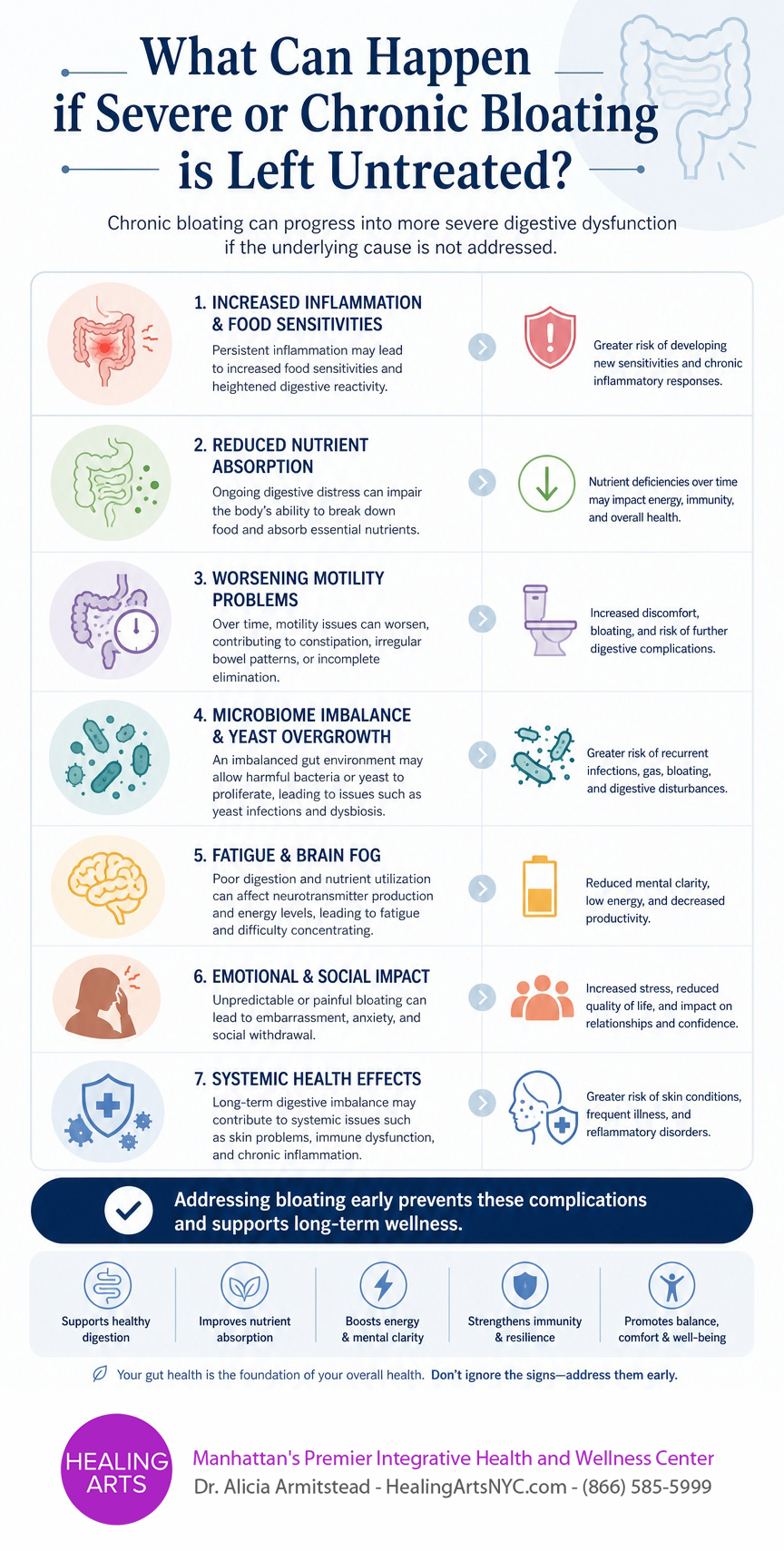
What Can Happen if Severe or Chronic Bloating is Left Untreated?
Chronic bloating can progress into more severe digestive dysfunction if the underlying cause is not addressed. Persistent inflammation may lead to increased food sensitivities and reduced nutrient absorption. Over time, motility issues can worsen, contributing to constipation or irregular bowel patterns. Untreated bloating may also affect the microbiome, allowing harmful bacteria or yeast to proliferate causing yeast infections.
Many patients develop fatigue or brain fog due to poor digestion and nutrient utilization. Emotional stress can increase as bloating becomes unpredictable or socially limiting. Long-term digestive imbalance may contribute to systemic issues such as skin problems or immune dysfunction. Addressing bloating early prevents these complications and supports long-term wellness.
Other, Serious Medical Conditions Related to Bloating
Like many symptoms, bloating can sometimes be a sign of more serious underlying conditions that require careful evaluation.
In the twenty plus years I've been helping people overcome serve and chronic bloating, I've seen bloating associated with inflammatory bowel diseases such as Crohn’s Disease or Ulcerative Colitis. It can also occur in cases of Celiac Disease, where gluten triggers immune reactions that damage the digestive tract.
Persistent bloating may be linked to Small Intestinal Bacterial Overgrowth (SIBO), a condition where excess bacteria interfere with normal digestion and motility. In certain situations, bloating can accompany ovarian or abdominal disorders that place pressure on the digestive system.
Some patients experience bloating as part of chronic Pancreatitis, which affects enzyme production and nutrient breakdown. Severe or long‑lasting bloating may also be connected to gastrointestinal obstruction or impaired motility that prevents food from moving properly.
Bloating can overlap with these more serious conditions, making a thorough holistic evaluation is essential to understand what your body is signaling.
Why Patients Choose Dr. Alicia Armitstead
Patients choose my practice because I focus on identifying the true cause of their symptoms rather than offering temporary relief. My holistic approach integrates Nutrition Response Testing, Applied Kinesiology, and personalized nutritional support. I take the time to understand each patient’s unique health history and lifestyle. Many individuals appreciate that my remedies are natural, non-invasive, and tailored to their needs.
I provide clear guidance and ongoing support throughout the healing process. My Manhattan and Connecticut locations offer a comfortable, patient-centered environment. I have helped thousands of patients overcome chronic digestive issues through targeted holistic care. My goal is always to restore balance, comfort, and long-term digestive health.
Advanced Bloating FAQs
- Can chronic bloating be related to environmental toxins or heavy metals? - Yes, toxins can disrupt digestive function and microbiome balance, and muscle testing helps identify these stressors.
- Does bloating always indicate a food sensitivity? - Not always; it may also stem from motility issues, enzyme deficiencies, or microbial imbalance.
- Can hormonal changes worsen bloating even if digestion seems normal? - Yes, progesterone fluctuations can slow motility and contribute to bloating during certain phases of life.
- Is it possible to have bloating without visible abdominal swelling? - Yes, internal pressure and discomfort can occur even when the abdomen appears normal externally.
- Can chronic stress alone trigger bloating? - Absolutely; stress affects the nervous system, which directly influences digestive motility and enzyme production.

Contact Dr. Alicia Armitstead to Learn More About Overcoming Severe and Chronic Bloating Naturally in NYC and CT
Bloating is a common but disruptive symptom that often signals deeper digestive imbalances. Through holistic evaluation and natural remedies, I help patients identify and resolve the root cause of their discomfort. My approach focuses on restoring proper digestive function, improving motility, and supporting long-term gut health.
Many patients experience significant relief once their body’s stressors are identified through muscle testing. You don’t have to live with chronic bloating or guess what’s causing it. My Manhattan and Connecticut offices offer a supportive environment for your healing journey. If you’re ready to address your bloating naturally and effectively, I invite you to schedule a consultation. Together, we can restore comfort, confidence, and digestive balance.
Please contact us today!
Additional References
- Gas in the Digestive Tract - National Institute of Diabetes and Digestive and Kidney Diseases
- Belching, Bloating, and Flatulence Overview - American College of Gastroenterology