

A Step-by-Step Guide To Beginning Chakra Meditation and Working with Your Chakras
The most crucial part of chakra meditation is honoring your own pace. You do not need to master anything. You do not need to feel something profound every time. Some days you may feel a lot. On other days, you may feel very little. Both are completely normal. Healing is not linear, and energy work is subtle.
-Dr. Alicia Armitstead
Learn How To Connect With Your Chakras For Deeper Healing
Chakras are the body’s subtle energy centers, and although they are rooted in ancient traditions, they are deeply relevant to modern healing. I often describe them to my patients as the emotional and energetic counterparts to the physical systems we support through muscle testing. Each chakra influences specific organs, emotional themes, and patterns of thought. When these centers are balanced, you feel grounded, clear, connected, and more at home in your body. When they are blocked or overwhelmed, you may notice anxiety, fatigue, digestive discomfort, tension, or a sense of being disconnected from yourself.
Chakras are not abstract or mystical. They are another way your body communicates. Just as your nervous system, gut, and hormones reveal stress patterns, your energy centers reveal where you are holding fear, grief, anger, or old beliefs that no longer serve you. Working with your chakras is simply another doorway into understanding yourself more deeply.
A Brief History Of Chakra Practice
The concept of chakras comes from ancient Indian spiritual traditions, particularly yoga and Ayurveda. The word “chakra” means “wheel” or “disk” in Sanskrit, referring to the spinning nature of these energy centers. For thousands of years, practitioners have used breathwork, meditation, movement, sound, and intention to balance these centers and support healing on all levels.
Over time, chakra teachings have been woven into many modern healing practices. You may encounter them in yoga classes, meditation practices, energy healing sessions, and even in certain forms of psychotherapy. While the language may vary, the core idea remains the same: your physical body, emotional body, and energetic body are deeply connected, and your well‑being depends on the flow between them.
The Purpose Of Working With Your Chakras
The purpose of chakra practice is not to escape your body or bypass your emotions. It is the opposite. Chakra work invites you to become more present with yourself. Each chakra reflects a different part of your life.
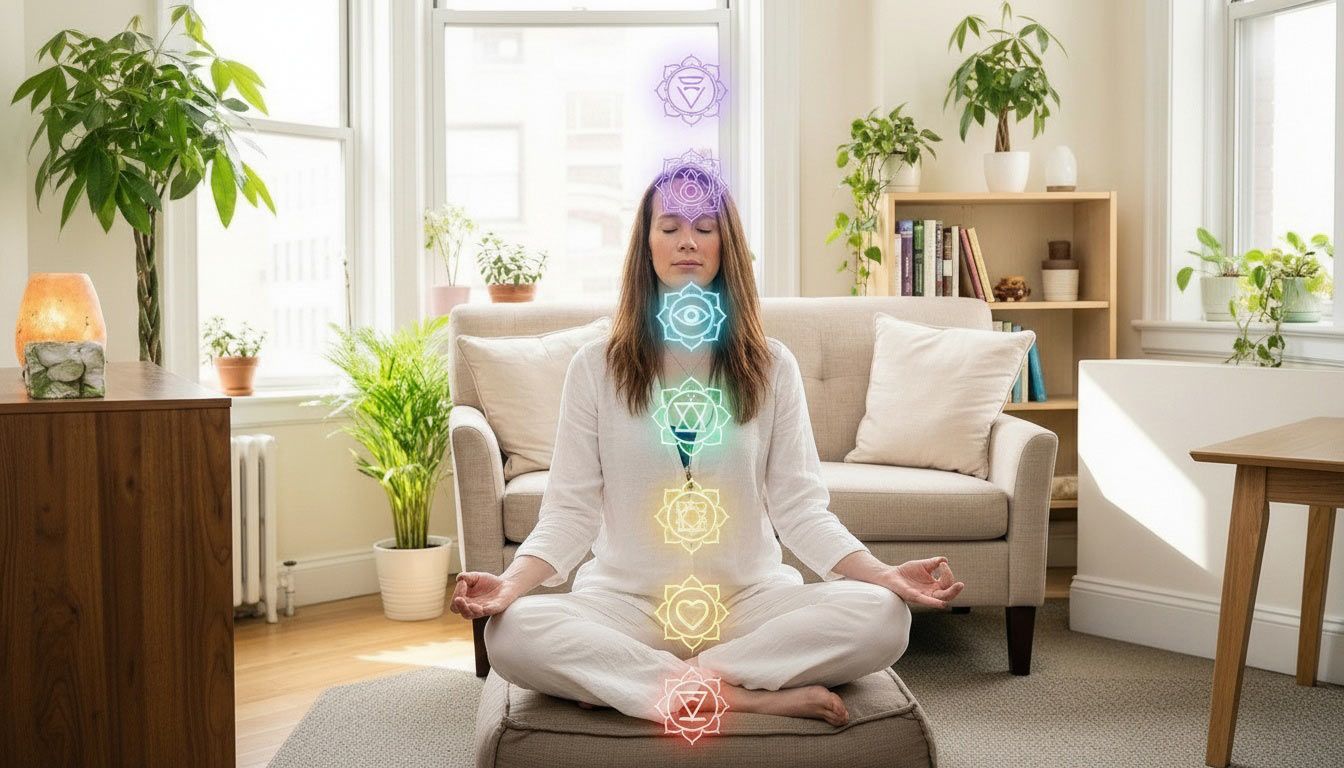
- Chakra 1: The Root Chakra governs safety, stability, and your sense of belonging.
- Chakra 2: The Sacral Chakra influences creativity, emotional flow, and pleasure.
- Chakra 3: The Solar Plexus Chakra supports confidence, boundaries, and personal power.
- Chakra 4: The Heart Chakra holds love, compassion, and connection.
- Chakra 5: The Throat Chakra governs expression and truth.
- Chakra 6: The Third Eye Chakra relates to intuition, clarity, and inner wisdom.
- Chakra 7: The Crown Chakra connects you to meaning, purpose, and spiritual support.
When you begin working with your chakras, you start to notice where you feel open and where you feel shut down. You may realize that you have trouble speaking up, that you feel unsafe in your body, or that you struggle to receive love. Chakra practice provides a compassionate framework for exploring these patterns. It becomes another way to understand the deeper layers of your healing, alongside nutrition, detoxification, nervous system support, and emotional release work.
Preparing Your Body And Mind To Begin
Before you start any chakra practice, it is essential to create a sense of safety in your body. You do not need special tools or elaborate rituals. What you need most is a quiet moment and a willingness to listen to yourself. Find a comfortable place to sit or lie down where you will not be interrupted. Let your breath settle naturally. Allow your body to soften into the moment.
As you prepare, remind yourself that there is no right or wrong way to do this. You are not trying to force an experience. You are simply exploring. If emotions arise, let them. If your mind wanders, let it. Chakra practice is not about perfection. It is about presence.
A Step‑By‑Step Guide To Beginning Your Chakra Practice
- Begin by bringing your awareness to Chakra 1, the Root Chakra, located at the base of your spine. This center governs your sense of safety, stability, and connection to the physical world. As you breathe, imagine a warm, steady light here. Ask yourself whether you feel grounded in your life. You do not need to analyze the answer. Just notice.
- Move your awareness to Chakra 2, the Sacral Chakra, a few inches below your navel. This center influences your emotions, creativity, sensuality, and ability to experience pleasure. Imagine an orange glow or simply breathe into this space. Ask yourself whether you let your emotions move you or tend to hold them in.
- Shift your focus to Chakra 3, the Solar Plexus Chakra, located in your upper abdomen. This center governs confidence, boundaries, motivation, and personal power. You might imagine a yellow light here. Ask yourself whether you trust yourself and whether you feel empowered to make choices that honor your needs.
- Bring your awareness to Chakra 4, the Heart Chakra, in the center of your chest. This center holds love, compassion, forgiveness, and connection. Imagine a soft green or pink light. Ask yourself how open your heart feels today. If you notice tightness or heaviness, simply breathe into it without trying to change anything.
- Move your awareness to Chakra 5, the Throat Chakra, located at your throat. This center governs communication, truth, and self‑expression. Imagine a blue light here. Ask yourself whether you feel free to express yourself or whether you tend to hold back.
- Shift your focus to Chakra 6, the Third Eye Chakra, located between your eyebrows. This center influences intuition, insight, clarity, and inner wisdom. Imagine an indigo light. Ask yourself whether you listen to your instincts or whether you tend to override them.
- Finally, bring your awareness to Chakra 7, the Crown Chakra, located at the top of your head. This center connects you to meaning, purpose, and a sense of spiritual support. Imagine a violet or white light. Ask yourself whether you feel connected to something greater than your daily responsibilities.
When you are ready, take a few deeper breaths and gently return to the room. Notice how you feel compared to when you began. Even a few minutes of awareness can shift your energy.
Integrating Chakra Practice Into Your Daily Life
Chakra work does not need to be long or complicated. You can spend just a few minutes each day checking in with one chakra at a time. On a day when you feel anxious, you might place a hand on your heart or your root and breathe there. On a day when you feel unheard, you might bring awareness to your throat and ask what needs to be expressed. Over time, this becomes a gentle conversation with your body.
Chakra practice complements the physical and emotional work we do together at Healing Arts NYC. When we support your nervous system, balance your nutrition, clear toxins, and release emotional patterns, working with your chakras can deepen and stabilize those changes. It gives you a way to participate actively in your healing, not just as a patient, but as a partner with your own body.
Honoring Your Own Pace
The most crucial part of chakra meditation is honoring your own pace. You do not need to master anything. You do not need to feel something profound every time. Some days you may feel a lot. On other days, you may feel very little. Both are completely normal. Healing is not linear, and energy work is subtle.
What matters most is your willingness to show up for yourself with curiosity and kindness. When you begin to listen to your energy centers, you are really listening to your whole self. And that is where true healing begins.
Please Share this Blog Post